MarketingAdvanced5 minutes
Updated
Artificial intelligence and machine learning: what's the difference?
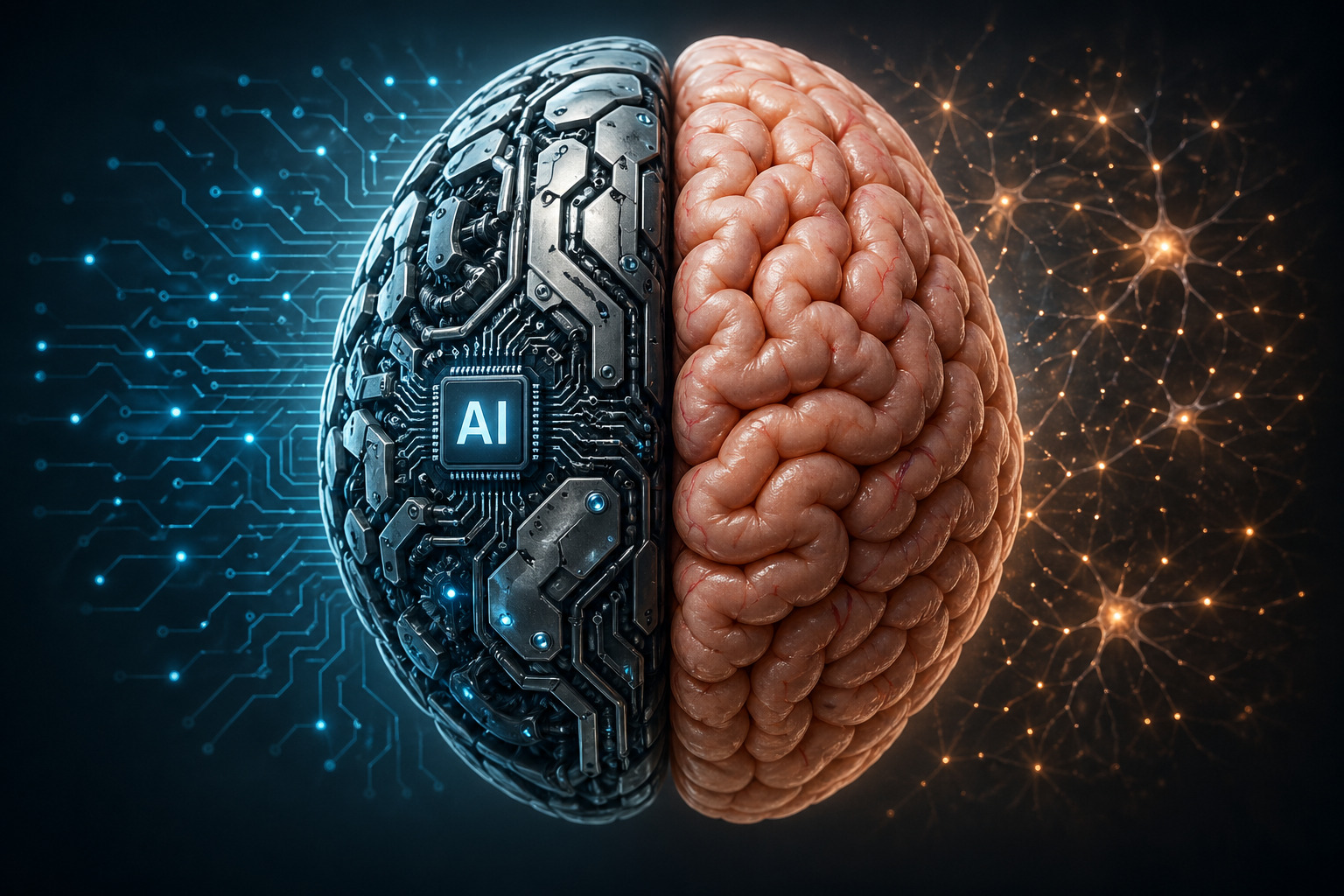
The terms artificial intelligence (AI) and machine learning (ML) are frequently used in the marketing industry and unfortunately often mistakenly equated.

Differences between artificial intelligence and machine learning
Category | Artificial intelligence (AI) | Machine learning (ML) |
Definition | AI refers to the creation of systems that are capable of performing tasks that normally require human intelligence. This includes speech recognition, decision making, visual perception and translation between languages. | ML is a branch of AI that focuses on teaching computers to learn from data and make predictions or decisions. ML systems improve their performance by training them with more data. |
Scope | AI has a broader scope and encompasses everything a computer does to act intelligently, whether through rule-based systems, machine learning, or other methods. | ML is more specific and focuses on the development of algorithms that can learn and make predictions. |
Learning ability | AI systems can either be rule-based and without the ability to learn, or they can use machine learning to learn and improve. | ML systems are designed to learn and improve over time. |
Goal | The aim of AI is to create intelligent systems that can perform tasks that normally require human intelligence. | The aim of ML is to enable systems to learn from data and make predictions or decisions. |
Applications of artificial intelligence (AI) and machine learning (ML) in the corporate world
Artificial intelligence (AI) and machine learning (ML) are having a profound impact on the corporate world and have become key elements for the success and efficiency of companies in a wide range of industries.
Applications of artificial intelligence
Artificial intelligence (AI) refers to the use of machines and systems that are able to carry out activities that usually require human intelligence. This definition may seem broad, but in a business context, AI usually refers to technologies that are able to recognize environmental factors, act autonomously and thereby increase the probability of achieving defined goals independently and efficiently.
Core applications
Analysis and conclusion
Planning
Learning
Decision-making and decision-making
Optimization
Applications of machine learning
In machine learning, the focus is on the methods - the mathematical models and algorithms - that enable a computer system to learn. It deals with how to use large amounts of data from various sources in such a way that a machine can use the information to learn through experience.
Before machine learning was introduced, developers taught computers how to work with data by programming complex sequences of instructions. Today, the traditional approach would require writing millions of lines of code to accomplish the same flexible and complicated tasks that are possible with machine learning. Each new and unknown problem would have required a programmer to write new code.
Core applications
Deep learning
Deep neural networks
Insights from innovation learning (innovation insights learning)
Adversarial learning
Synergy of artificial intelligence and machine learning
AI and ML are two technologies that work hand in hand to optimize processes and drive innovation. This comprehensive table highlights how these technologies are used in different industries, performing both independent and overlapping tasks.
Scope | Task | AI task | ML Task |
Customer service and chatbots | Automated response to FAQs | Chatbots answer customer questions | Analyzing data to improve responses |
ML-based customer interaction | Interaction with customers | Prediction of customer inquiries | |
Personalization of customer service | Customization of the interaction | Analysis of behavior and preferences | |
Sales and marketing | Personalized advertising | Targeted advertising | Analysis of customer preferences |
Predictive analytics for purchasing behavior | Adaptation of sales strategies | Prediction of purchasing behavior | |
Lead generation | Identification of potential customers | Scoring of leads | |
Production & supply chain management | Optimization of the supply chain | Automated warehouse management | Increasing efficiency through data analysis |
Forecasting delivery times | Provision of delivery time information | More accurate prediction of delivery times | |
Production planning | Automated production planning | Optimization of production plans | |
Financial services | Fraud detection | Identification of suspicious activities | Pattern recognition for fraud prevention |
Algorithmic trading | Execution of trading transactions | Optimization of trading strategies | |
Credit risk assessment | Assessment of creditworthiness | Analysis of financial data and risk assessment | |
Healthcare | Image analysis | Analysis of medical images | Improvement in diagnostic accuracy |
Personalized treatment plans | Creation of treatment plans | Analysis of patient data | |
Predictive analytics | Prediction of disease outbreaks | Identification of patient needs | |
Human resources and talent acquisition | Automated CV analysis | Scanning applicant profiles | Assessment of qualifications and experience |
Predicting employee turnover | Identification of fluctuation risks | Analysis of employee data | |
Personalized employee development | Design of further training plans | Analysis of employee performance | |
Research and development | Data analysis for research purposes | Accelerating scientific discoveries | Analysis and interpretation of research data |
Drug development | Identification of potential drug candidates | Analysis of data for drug development | |
Optimization of material sciences | Support in the development of new materials | Analysis of material properties | |
Language and text processing | Voice assistants | Speech recognition and processing | Improving speech recognition accuracy |
Automated translation services | Provision of translations | Optimization of the translation accuracy | |
Sentiment analysis | Analysis of customer ratings | Recognizing opinions and moods | |
Security and monitoring | Face recognition | Identification and tracking of persons | Improved detection accuracy |
Predicting security threats | Identification of potential risks | Analysis of data for risk prediction | |
Network security | Protection against cyber attacks | Detection of anomalies and threat patterns | |
Retail trade | Personalization of the customer experience | Analysis of shopping habits | Personalization of offers |
Optimization of stock levels | Forecast of demand | Optimization of stock levels | |
Price optimization | Dynamic pricing | Analysis of market conditions and demand |
Topics
Share article
Cite this article
Use the reference below when citing this article.
Alexander Löwe (2023). Artificial intelligence and machine learning: what's the difference?. MoreThanDigital. ISSN 2673-1754. https://morethandigital.info/artificial-intelligence-and-machine-learning-whats-the-difference
- Published
- 4 Dec 2023
- Updated
- 30 Jul 2026
- Original language
- DE
- Also available in
- DE
Written by
author