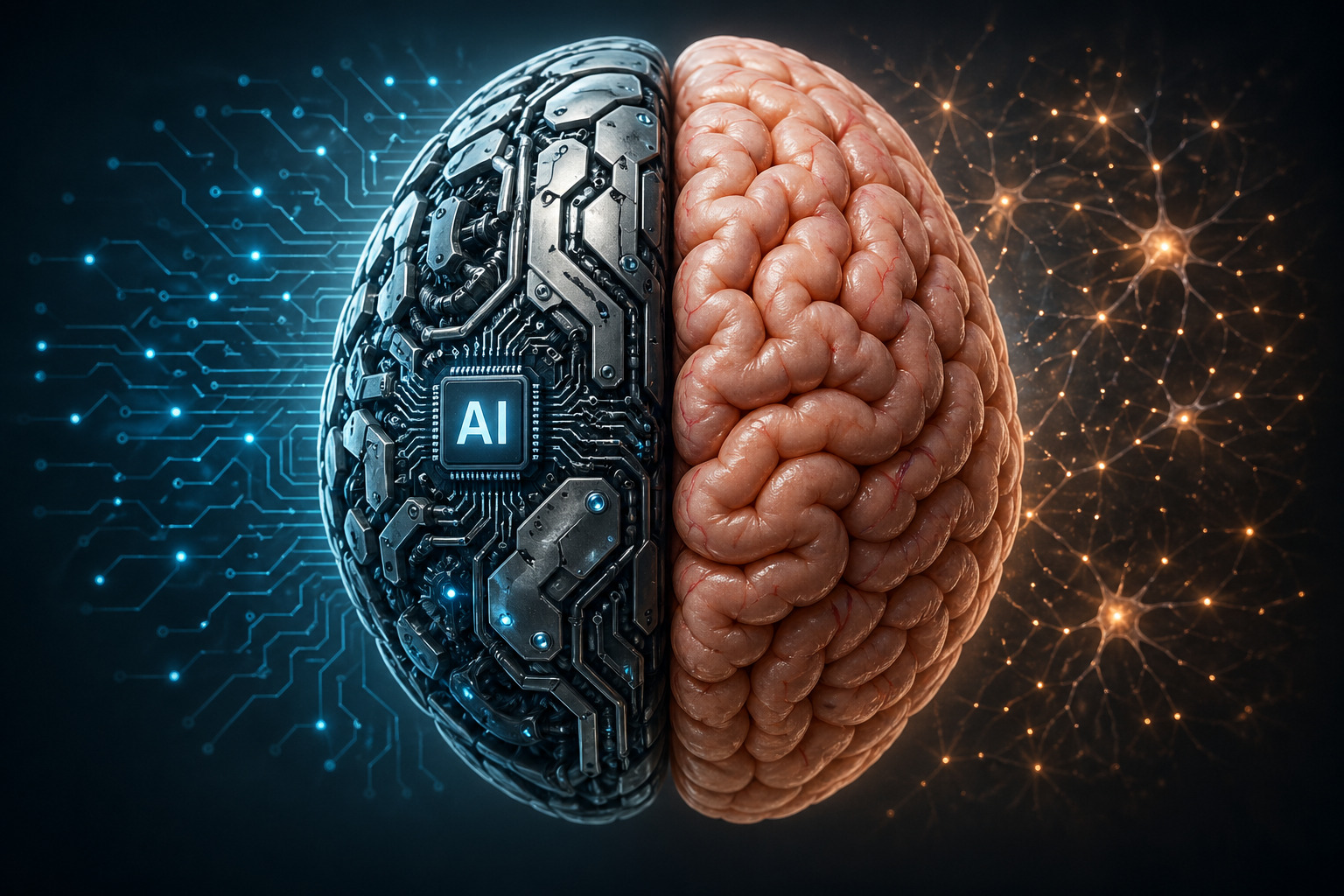
AI rarely fails in companies because of technical issues. It fails because of people who are afraid, don’t know what they’re allowed to do, and are fundamentally suspicious of change. As a behavior architect, Wolfgang Gehrer explains the five barriers that truly stand in the way of AI projects
Multi-agent systems (MAS) are on the rise and represent the next step in the evolution of single-agent LLMS. They are autonomous, efficient, and promise cost savings. By following a few basic rules, you can use them to create entire AI-driven project teams.
AI systems like ChatGPT, Gemini, and Perplexity are fundamentally changing how we discover and perceive brand messages. In addition to issues of machine readability, content formats that list and evaluate product features and functions are becoming increasingly relevant. For this reason, some are now arguing that the brand no longer matters. They claim that the new currency is the product’s hard facts—that is, its functions and features. The article examines GEO and the rational decisions made by AI in relation to brand perception. It answers the question of why emotional brand management is more important than ever.
Co-authors: Liam Reeve, PhD Candidate, The University of Hong Kong; Urs Bolt, WealthTech Expert
This article will provide a WealthTech update for the year 2025 in SEA, and an outlook for 2026, and beyond.
This article argues for a paradigm shift in the use of AI in marketing: Efficiency should not be the primary goal of AI deployment. Instead, it should be quality. The quality of the customer journey. The quality of the customer experience. The quality of the product. The quality of the service. When it comes to brand experiences, the starting point should always be “strategy first” or “brand strategy first,” not “AI first.”
David Ogilvy coined the following statement: “Great marketing only makes a bad product fail faster.” Meaning: Overpromising cannot make up for underdelivering. Savvy! Smart man. But today, this beautiful statement no longer seems to apply. We are realizing that brands want to improve their products with all their might through automation and AI, even with deep fakes and so-called greenwashing and bluewashing.
Today, we can learn more about products and companies than ever before. We can research online. We can read other people's product experiences in communities or on review platforms. But at the same time, there has never been so much misinformation. This unsettles consumers. We are losing trust. We have obviously already lost trust in politics. Trust in brands is also suffering greatly at the moment.
This article describes the new currency in marketing: transparency. And how brands can successfully regain the trust and loyalty of their customers.
In the digital era, technology is advancing relentlessly – and entrepreneurs must not be left behind. In order to survive in an increasingly digitised market, small businesses in particular need efficient tools that save time and resources. This allows them to focus on what they are really passionate about: their creativity, their business or their family.
The rapid progress of AI and digitalisation is forcing companies to question old strategies. If you not only want to grow, but also become the market leader, you need a clear roadmap. These five steps show you how to sharpen your digital identity, empower your employees and keep your strategy dynamic in order to be successful in the long term - while connecting people and technology.