Skip to content

Topic

Data

38 articles

Latest

  • The hidden costs of poorly retrievable knowledge

    One of the biggest problems of today is to provide employees with the right knowledge at the right time. Intelligent internal company search engines can help here. Used correctly, such a search engine can not only reduce pure search time, but also lead to project completions of better quality, reduce costs, improve customer service and greatly simplify employees' everyday work. This article explains how this can also work in your own company.

    Internal CommunicationBastian Maiworm6 minutes

  • Understanding Consumer Behavior Patterns Through 3D Data Visualization

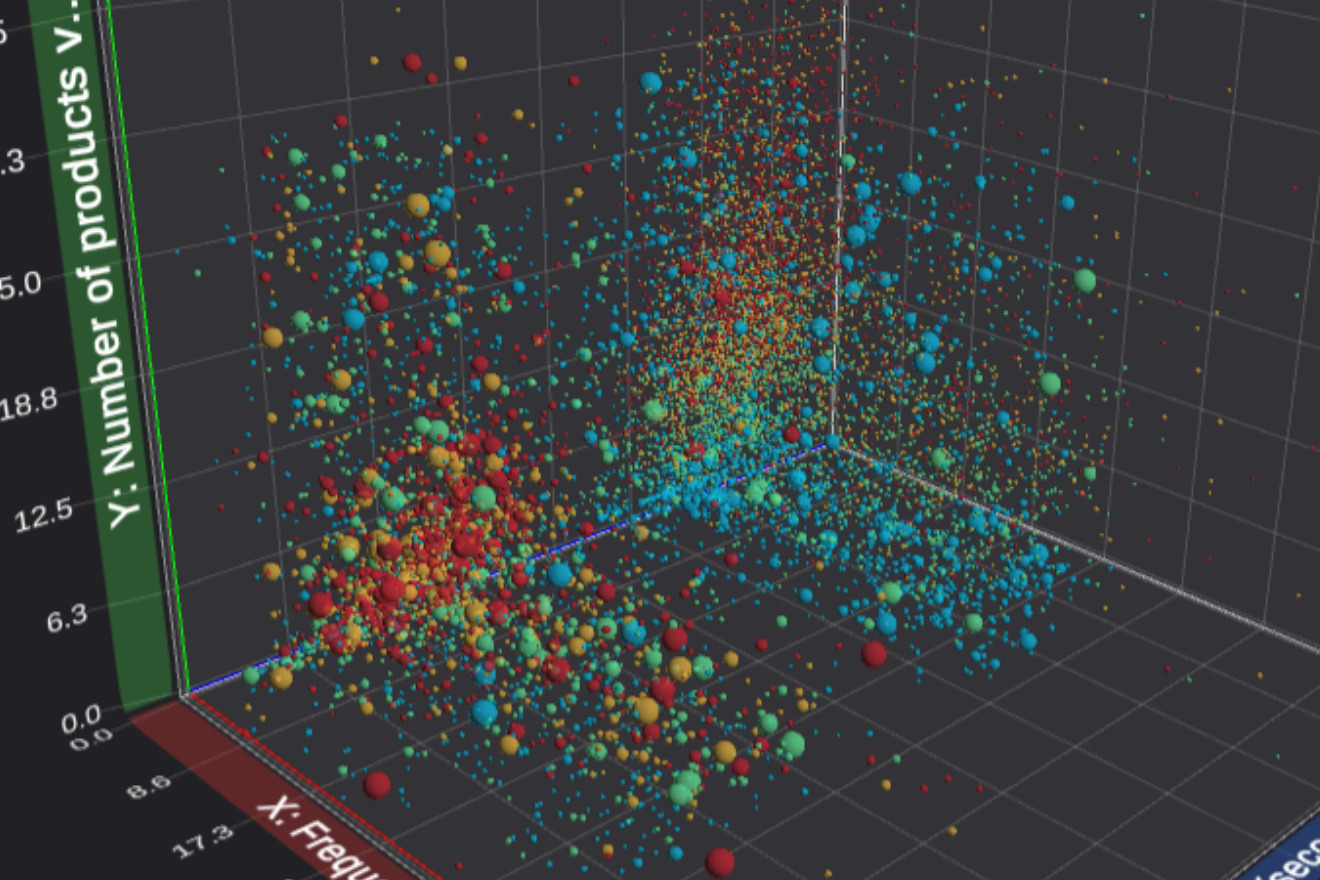
    Any business wants to spend its marketing dollars wisely. Creating campaigns that are general in nature likely won’t deliver high revenue. Instead, you want to target as precisely as possible based on your customers’ buying activities. We can all agree that consumer behavior patterns are shifting and changing. Many things impact these patterns, both internally and externally. The last year-plus shifted the consumer base tremendously. For example, 75 percent of consumers tried new brands and different ways of shopping since the beginning of the pandemic. Consumer behavior is a “live” data set, and deriving insights from it needs to happen quickly, so you can pivot to align with current motivations.

    DataVirtualitics - smarter decision through multi-dimension data visualizations and easy to use AI4 minutes

  • Industrial AI Applications - Beyond the PoC

    The advancements of AI in various areas of our life make it one of the most appreciated technologies today. Impressive successes have been achieved, and the expectations are constantly rising. A tendency to transfer technology from the consumer space to industrial applications is also observed in this area. However, according to several analysts papers, industrial AI projects never get beyond a PoC in approximately 75% of the cases. Why is that the case? Enthusiastically building on AI’s success in the consumer space often leave some important properties of industrial applications overlooked. In this article we list a few industrial challenges that have to be addressed to make an AI project successful.

    AI & Machine LearningChristopher Ganz7 minutes

  • 5 good reasons for digital twins

    We encounter large data sets more and more often in everyday life. The important thing here is to put the large amounts of data into a format in which we can read out patterns in order to better understand behavior and make predictions. Digital twins give us exactly this capability. They enable us to improve business performance and make well-informed decisions.

    Smart- and Big DataNicole Lontzek6 minutes

  • Artificial Intelligence in Healthcare - Driver of Digitalization?

    The Corona pandemic has changed our behavior. Previously less frequently used technologies could benefit from this and positively influence the lives of people in lockdown. In this paper, the two authors show how the judicious use of Artificial Intelligence can drive healthcare as a whole towards digitalization. In the future, AI will autonomously research, analyze, and provide decision-making guidance for politicians, managers, scientists, and medical professionals.

    Healthcare & Social AffairsRalf H. KOMOR6 minutes

  • What is unstructured data? - Different types of data

    Unstructured data is information that exists in a non-normalized and non-identifiable data structure. Classically, this includes text, image, audio and video files that are not stored in databases. Especially in the environment of Big Data, unstructured data is of enormous importance.

    Beginner / BasicBastian Maiworm4 minutes

  • Scaling Artificial Intelligence (AI) - 4 Reasons for People and Enablement

    Data has been called the most valuable resource of the new world. Ultimately, however, people are essential to derive value from data and apply it in innovative ways. Leaders recognize that advances in intelligent automation and artificial intelligence will have a significant impact on the workforce. And that they need to invest in talent that understands the intersection of data and algorithms and their impact on workflows. This article highlights strategies that will have the greatest impact on closing organizational skills gaps.

    Human RessourcesBritta Daffner5 minutes