In a time in which we are moving at an almost absurd speed due to the technical possibilities, 4 generations with different prerequisites and needs are coming together. For the companies, it is now time to finally "get going" and initiate a rethink, because the dusty "top-down" structures, insofar as they still function at all, will no longer be effective in the long term in terms of the economy and the labor market.
This is the second article in the series dealing with the topic of the great transformation. I have already explained in detail in the first article that this is a large subject area that goes far beyond currently frequently discussed topics such as digital transformation, work 2.0, home office work and New Work.
In this article, I now propose a process that I consider meaningful and promising for harmonizing your company or organization as well as possible with the challenges of our time in the purpose of a location determination and realignment. This dynamic process, which is not to be understood as a concept or model, has the goal of promoting a more holistic way of thinking, which ultimately also leads to new types of structures, processes and an image of man that is better suited to the demands of our time. In my view, this is long overdue, because time is pressing, new approaches are required, and untapped potential that has been overlooked so far should be uncovered and utilized.
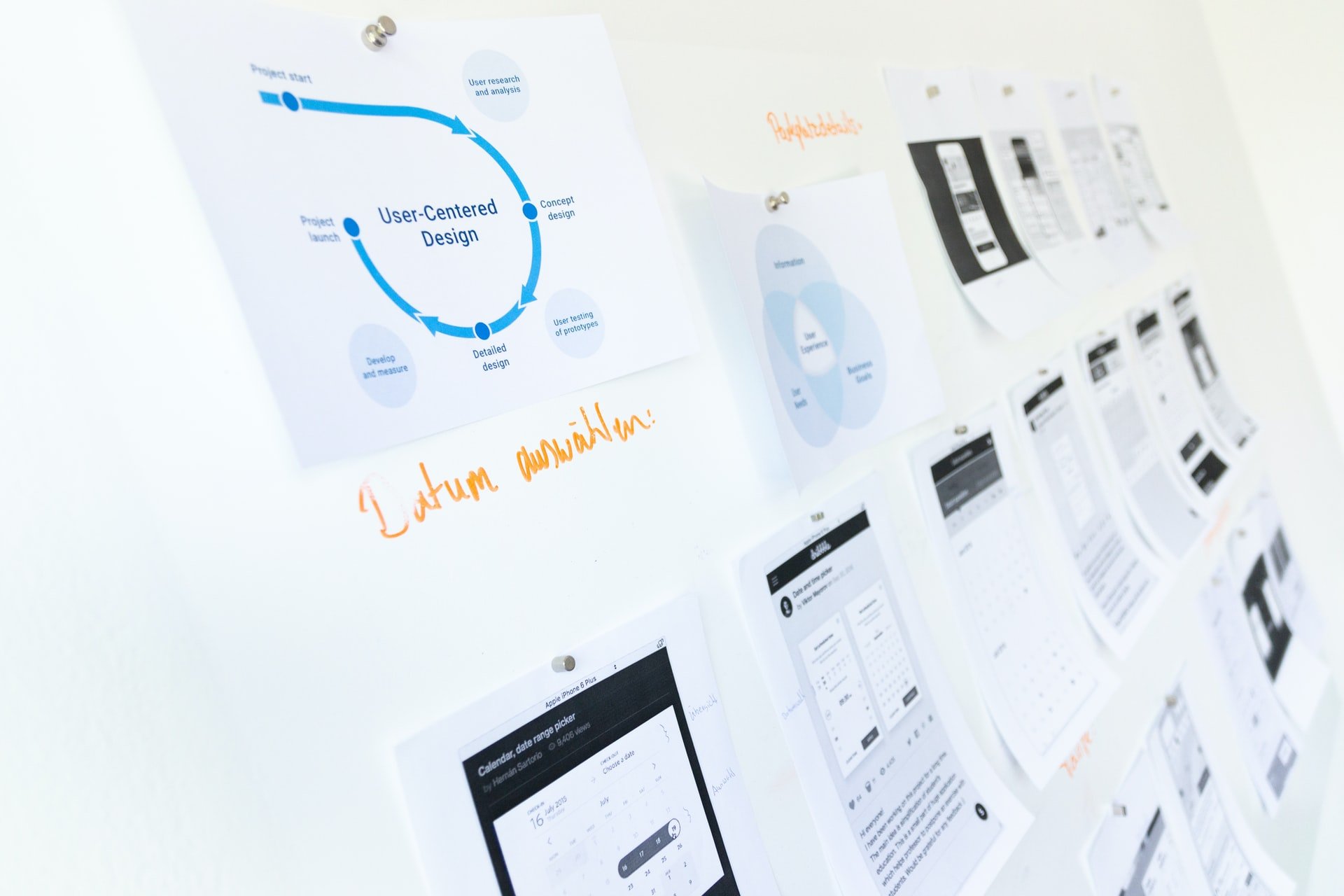
This is about competencies. These are things that we do - demonstrably and observably - and how. So it's about learning, and learning by example is particularly stimulating. If we learn from others, the probability increases that we can also do something or at least tackle it. Therefore: let's learn from the approach of startups. The most important, because agile and out-of-the-box, techniques we can copy for our company and thus gain a bit of agility and new shores.
The growth of data has never been faster than it is today. Technologies have never developed faster than now. Added to this are new working models through New Work, which demand new access to and handling of knowledge and data from companies and employees.
Collaborating online has become established: not only for conversation, but also playfully in a shared meadow. Miro, Mural & Co offer tools for collaboration in analog, hybrid and distant settings, which convinces with its multiple simple functionalities.
After leading virtual or decentralized teams comes the new challenge for post-pandemic leaders: hybrid leadership. The last two years have shown that home office is a construct that can work. And that more workplaces are suitable for it than thought. But how will this affect the world of work in 2022? Will everyone return? Hybrid we become the model of the future.
Between endless planning or actionistic "just go for it," there's a simple middle ground for moving into uncharted territory. In iterations you achieve progress without having to "fail your way forward".
The effectiveness of coaching has long been proven. However, many people are critical of online coaching. But the work of a good coach is of equal value. It doesn't matter whether it's analog or digital. The medium is merely the bridge between the people involved, and the decisive factor is who crosses this bridge. Not whether it is made of wood or metal. Virtual coaching is effective and offers added value.
DAOs embed cooperation and collaboration in the DNA of many blockchain applications. But also for traditional DAO stands for Decentralized Autonomous Organizations and, let's face it, is for most either completely unknown or another buzzword of the blockchain bubble. But the idea behind DAO is relevant to all of us. Basically, DAOs are about finding new forms in which to organize work and, more importantly, collaboration. These new forms are based on the core idea of eye-level collaboration between the stakeholders involved. In this context, topics such as stakeholder economy instead of shareholder economy and ecosystems instead of centrally controlled platforms are much better known. Decentralized Autonomous Organizations are now a special form of how such cooperation principles can be implemented. The DAO idea should therefore be studied by anyone who believes that there will be hierarchy-free, cooperative forms of collaboration between individuals and also between companies in the future. companies, new collaboration models are becoming more important. Is there a lesson to be learned from DAOs? A glimpse behind the scenes reveals the answer.
Probably the biggest challenge facing companies today is providing information and stopping the loss of know-how. How can companies make the right information available to the right people at the right time?
A quick look at the current business press may not be representative, but it still proves the high relevance of digital transformation in supply chain management. We explain why the digital supply chain is also exciting for SMEs.